Understanding Traffic vs Revenue: What Beginners Get Wrong
Meta Description: Learn the real relationship between traffic and revenue. Discover why more visitors doesn't always mean more money and what metrics actually matter for monetization.
Primary Keyword: traffic vs revenue
Content Pillar: Digital Marketing Fundamentals
Reading Time: 14 minutes
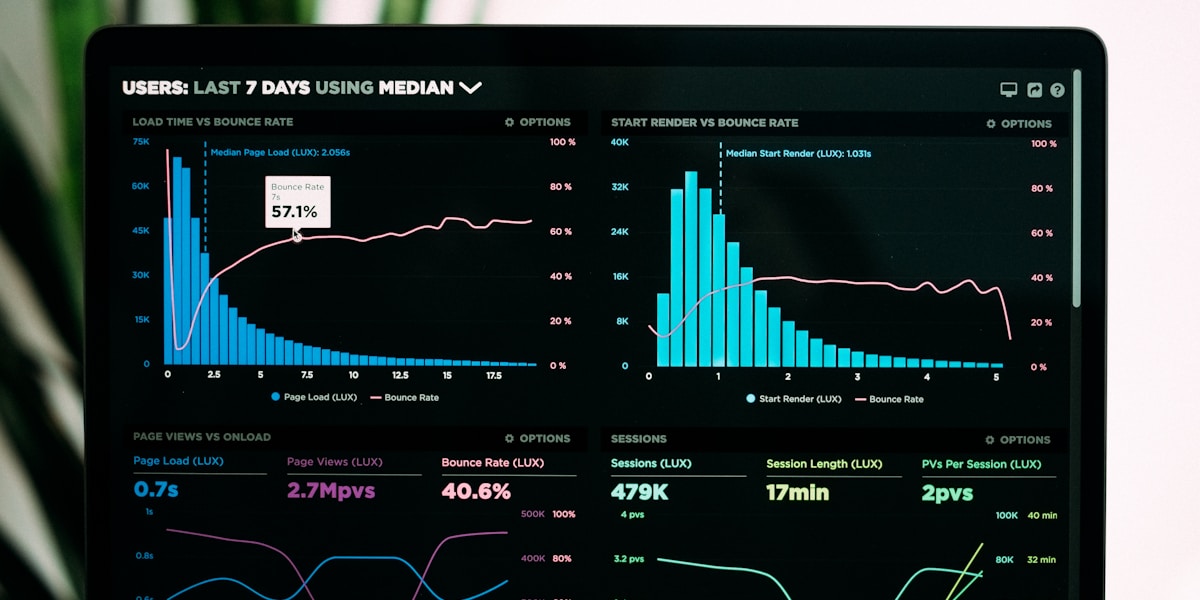
You launched your website three months ago. You are getting 5,000 visitors per month. You feel proud of this growth.
Then you check your earnings. Twelve dollars.
Wait, what? Five thousand people visited your site and you made twelve dollars? That is $0.0024 per visitor. At this rate, you would need 400,000 monthly visitors to earn $1,000.
Something does not add up. Everyone says you need traffic to make money. You have traffic. Where is the money?
The problem is not your traffic numbers. The problem is the fundamental misunderstanding about how traffic converts to revenue.
The Myth That Kills Monetization
The biggest lie beginners believe: more traffic automatically equals more money.
This belief seems logical. If you make $10 from 1,000 visitors, surely you will make $100 from 10,000 visitors, right?
Wrong.
Traffic and revenue are related, but the relationship is not linear and not automatic.
Ten thousand visitors of the wrong type can earn less than 500 visitors of the right type. Traffic quality matters more than traffic quantity for most monetization models.
A thousand visitors from Google searching for solutions to specific problems convert better than 10,000 visitors from viral social media posts.
A hundred visitors reading 10 minutes and clicking multiple pages generate more ad revenue than 1,000 visitors bouncing after 15 seconds.
Fifty visitors landing on affiliate review content might generate more commissions than 5,000 visitors reading inspirational stories.
Traffic is necessary. But traffic without monetization strategy is just numbers on a dashboard.
The real equation is: Revenue = Traffic × Conversion Rate × Average Value Per Conversion
Most beginners obsess over increasing traffic while ignoring the other two variables that often matter more.

The Three Factors That Actually Determine Revenue
Revenue generation depends on three distinct factors working together.
Factor 1: Audience Size (Traffic Volume)
This is what everyone focuses on. How many people visit your site? Raw traffic numbers matter, but they are only one piece.
More traffic creates more opportunities for monetization. But those opportunities only convert if the other factors align.
Traffic volume alone is vanity metrics without context.
Factor 2: Audience Quality (Intent and Engagement)
This is what beginners miss. Where did your visitors come from? What are they looking for? How engaged are they?
A visitor from Google searching "best running shoes for flat feet" has commercial intent. They are researching a purchase. Affiliate links convert.
A visitor from Pinterest who clicked a motivational quote graphic has zero commercial intent. They consume your content and leave. Conversions are unlikely.
A visitor who reads for 8 minutes and visits four pages generates more ad impressions and signals value to algorithms.
A visitor who bounces in 10 seconds generates one ad impression and signals low-quality content.
Audience quality determines whether traffic converts to revenue.
Factor 3: Monetization Efficiency (Your Revenue Model)
How well optimized is your monetization strategy? Are you using the right model for your traffic type?
AdSense might earn $2 per 1,000 visitors in entertainment niches but $50 per 1,000 visitors in finance niches.
Affiliate commissions vary wildly. Promoting web hosting might earn $50-200 per conversion. Promoting books might earn $0.50-3 per conversion.
Digital products can generate $10-500 per sale. Physical product affiliate commissions might earn 3-10% of purchase value.
Your monetization model must match your audience and niche.
Optimizing these three factors together creates revenue. Optimizing only traffic creates frustration.
Why Your Traffic Might Not Be Making Money
Common scenarios explain why traffic fails to generate revenue.
Scenario 1: Wrong Traffic Source
You are getting 10,000 visitors monthly from viral TikTok videos. Your content entertains but does not educate or solve problems.
These visitors consume your content as entertainment. They are not researching purchases, seeking solutions, or comparing options.
Entertainment traffic rarely converts commercially. You need educational or commercial intent traffic.
Scenario 2: High Bounce Rate
Your traffic arrives, reads one paragraph, and leaves. Your bounce rate sits at 85%.
High bounce rates signal misalignment. Your title or description attracted clicks, but your content did not match expectations.
Or your content is good but formatting is terrible. Walls of text with no images or subheadings drive readers away.
Visitors who immediately bounce generate minimal ad impressions and zero conversions.
Scenario 3: Poor Monetization Match
You are running AdSense on content about free tools and budget strategies. Your audience specifically seeks free options.
They click ads rarely because they are not in buying mode. They came for free solutions, not paid products.
Your traffic has intent, but your monetization model mismatches that intent.
Scenario 4: No Conversion Pathway
Your content provides value but never guides readers toward monetization actions.
Articles with no affiliate links, no product recommendations, no email opt-ins, and no calls to action leave money on the table.
Traffic does not automatically monetize. You must create conversion pathways.
Scenario 5: Wrong Niche Economics
Your niche has low advertising rates and no high-value affiliate programs.
Motivational quotes might get huge traffic but earn $1-3 per 1,000 visitors via AdSense.
Credit card reviews get smaller traffic but earn $30-80 per 1,000 visitors.
Some niches are not economically viable regardless of traffic volume.
Different Traffic Sources Have Different Value
Not all traffic is created equal. Source dramatically impacts monetization potential.
Search Engine Traffic (High Value)
Visitors from Google, Bing, or other search engines typically have the highest commercial value.
They are actively seeking information, solutions, or products. They typed specific queries indicating intent.
"Best coffee maker under $100" signals purchase intent. "How to fix dripping faucet" signals problem-solving intent.
Both convert well for appropriate monetization. Search traffic engages deeply because you answered their specific query.
AdSense performs well with search traffic. Affiliate conversions are highest. Email opt-ins work.
Expected earnings: $5-50 per 1,000 visitors depending on niche.
Social Media Traffic (Medium-Low Value)
Traffic from Facebook, Instagram, Twitter, or Pinterest varies widely in quality.
Viral traffic spikes generate huge visitor numbers but terrible engagement. People scroll, skim, and leave.
Targeted social traffic from niche communities performs better. A running tips article shared in a marathon training Facebook group attracts engaged readers.
But generally, social traffic bounces faster, engages less, and converts worse than search traffic.
Expected earnings: $1-8 per 1,000 visitors depending on source and content alignment.
Direct Traffic (High Value if Loyal)
Visitors who type your URL or have your site bookmarked are returning readers.
They are engaged, loyal, and trust you. They read thoroughly and explore multiple pages.
Direct traffic converts well for product launches, affiliate recommendations, and email signups.
But building direct traffic requires months of consistent content and relationship building.
Expected earnings: $10-40 per 1,000 visitors once established.
Referral Traffic (Variable Value)
Traffic from other websites varies based on source alignment.
A backlink from a relevant blog in your niche sends engaged readers. A random link from a link directory sends low-quality traffic.
Evaluate referral traffic based on engagement metrics, not just volume.
Expected earnings: $2-20 per 1,000 visitors depending on source relevance.
The Revenue-Per-Visitor Metric That Matters
Stop obsessing over total traffic. Start tracking revenue per 1,000 visitors (RPM).
RPM reveals monetization efficiency. It tells you how effectively you convert traffic to dollars.
Calculate Your RPM:
RPM = (Total Revenue / Total Visitors) × 1,000
If you earned $50 from 5,000 visitors: ($50 / 5,000) × 1,000 = $10 RPM
This metric lets you compare monetization across traffic sources, content types, and niches.
RPM Benchmarks by Model:
- AdSense alone: $3-15 RPM (varies dramatically by niche)
- AdSense + Affiliates: $10-30 RPM (depends on product match)
- AdSense + Affiliates + Email: $15-50 RPM (comprehensive strategy)
- High-ticket affiliates: $30-100+ RPM (finance, business tools, courses)
- Digital products: $50-500+ RPM (requires product creation and sales funnel)
Most beginners start at $3-10 RPM. Optimizing monetization doubles or triples this before you grow traffic.
This matters enormously. Doubling RPM from $10 to $20 has the same revenue impact as doubling traffic. But optimizing monetization is often easier than doubling traffic.
Traffic Thresholds for Different Income Levels
Realistic traffic requirements vary by monetization model and niche.
To earn $100/month:
- AdSense only ($8 RPM): ~12,500 visitors
- AdSense + basic affiliates ($15 RPM): ~6,700 visitors
- Optimized affiliates ($30 RPM): ~3,300 visitors
- High-ticket products ($100 RPM): ~1,000 visitors
To earn $1,000/month:
- AdSense only ($8 RPM): ~125,000 visitors
- AdSense + affiliates ($15 RPM): ~67,000 visitors
- Optimized affiliates ($30 RPM): ~33,000 visitors
- High-ticket products ($100 RPM): ~10,000 visitors
- Digital products ($200 RPM): ~5,000 visitors
To earn $3,000/month:
- AdSense only ($8 RPM): ~375,000 visitors
- AdSense + affiliates ($15 RPM): ~200,000 visitors
- Optimized affiliates ($30 RPM): ~100,000 visitors
- High-ticket products ($100 RPM): ~30,000 visitors
- Digital products ($200 RPM): ~15,000 visitors
These numbers illustrate why monetization optimization matters.
Getting to 10,000 monthly visitors takes most beginners 6-12 months. At $8 RPM, that is $80/month.
But optimizing to $30 RPM with the same traffic generates $300/month. Same visitors, almost 4× the revenue.

The Biggest Mistake: Scaling Before Optimizing
Most beginners make this critical error.
They get 2,000 monthly visitors earning $15. Instead of optimizing monetization, they focus on tripling traffic to 6,000 visitors.
Six months later, they have 6,000 visitors earning $45. Triple the traffic, triple the revenue. Linear scaling.
The smarter approach: optimize first, then scale.
Spend those same six months improving monetization. Add strategic affiliate recommendations. Improve ad placement. Create email capture. Test different revenue models.
Now your 2,000 visitors earn $60. You tripled revenue without increasing traffic.
THEN scale traffic. When you grow to 6,000 visitors, you earn $180 instead of $45.
Optimization multiplies every future visitor's value. Traffic growth without optimization means working harder for the same per-visitor return.
How to Optimize Revenue Before Chasing Traffic
Specific improvements increase revenue without requiring more visitors.
Improvement 1: Add Strategic Affiliate Links
Review your most popular content. What products or services solve problems for your readers?
Add honest, helpful affiliate recommendations where appropriate. Do not spam links. Recommend products you believe in that genuinely help.
Even modest conversion rates (1-3% of visitors clicking affiliate links, 1-5% of clickers buying) dramatically increase RPM.
Improvement 2: Improve Content Engagement
Longer session duration generates more ad impressions and signals quality to search algorithms.
Add internal links encouraging exploration. Use compelling subheadings creating curiosity. Include relevant images breaking up text.
Reducing bounce rate from 70% to 50% can increase ad revenue by 30-50%.
Improvement 3: Optimize Ad Placement
AdSense allows multiple ad units. Strategic placement balances user experience with monetization.
Ads above the fold, within content, and at article end typically perform best. Test different configurations.
Auto ads can work well or poorly. Manual placement often outperforms auto ads once you understand your layout.
Improvement 4: Build Email List
Email subscribers represent owned audience you can monetize repeatedly.
Add opt-in forms offering valuable content upgrades. Even a 5% opt-in rate builds your list.
Email allows you to promote affiliate products, announce new content, and build relationships that convert better than cold traffic.
Improvement 5: Create High-Value Content
Some content types monetize better than others.
Product reviews, comparison articles, how-to guides, and best-of lists typically generate more affiliate revenue than general information articles.
Strategic creation of high-value content mixed with informational content balances SEO with monetization.
Improvement 6: Target Higher-Value Keywords
Not all search traffic pays equally. Commercial intent keywords typically have higher AdSense rates and better affiliate conversion.
"Best productivity apps" monetizes better than "productivity tips." Both provide value, but one signals closer to purchase.
Research keywords with commercial intent in your niche and create targeted content.
These optimizations can double or triple your RPM within 3-6 months without adding a single visitor.
When Traffic Volume Actually Matters
Traffic volume becomes important only after you optimize monetization.
If your RPM is $25-50, growing traffic has meaningful impact. Every 1,000 new visitors adds $25-50 monthly revenue.
If your RPM is $3-8, growing traffic barely moves the needle. You need massive traffic growth to see modest revenue increase.
Optimize until your RPM reaches $20-30+. Then prioritize traffic growth.
At that point, SEO improvements, content marketing, backlink building, and social promotion compound your revenue effectively.
You are no longer trading massive effort for tiny returns. You are scaling an optimized system.
The Content Quality Paradox
Here is the paradox that confuses beginners: lower traffic with higher quality often outperforms higher traffic with lower quality.
A website with 3,000 engaged visitors reading 5 pages per session and staying 8 minutes earns more than a website with 10,000 visitors bouncing after 30 seconds.
The 3,000-visitor site generates 15,000 page views. More ad impressions. Better engagement signals. Higher affiliate conversion likelihood.
The 10,000-visitor site generates 12,000 page views if 20% stay for a second page. Worse engagement signals. Lower conversion probability.
Quality traffic strategies (SEO, niche communities, email) often build slower but monetize better.
Viral traffic strategies (clickbait, controversy, trending topics) often build faster but monetize worse.
Choose your strategy based on revenue goals, not vanity metrics.

Real-World Revenue Expectations
Grounded expectations prevent discouragement.
Months 1-3:
- Traffic: 500-2,000 visitors/month
- Revenue: $5-30/month
- Learning phase, building foundation
Months 4-6:
- Traffic: 2,000-5,000 visitors/month
- Revenue: $30-150/month
- Content gaining traction, optimization beginning
Months 7-12:
- Traffic: 5,000-15,000 visitors/month
- Revenue: $150-600/month
- Momentum building, monetization improving
Month 12+:
- Traffic: 15,000-50,000 visitors/month
- Revenue: $600-2,500/month
- Established site, optimized systems
These numbers assume consistent content creation, solid SEO practices, and progressive monetization optimization.
Your results may vary based on niche, competition, and effort consistency. But these ranges represent realistic timelines for most beginners.
The pattern matters more than specific numbers: early months build foundation, middle months build momentum, later months compound results.
The Mindset Shift That Changes Everything
Stop asking "How do I get more traffic?"
Start asking "How do I make each visitor more valuable?"
This reframing changes your entire strategy.
Instead of chasing viral hits, you create helpful content for specific searches.
Instead of clickbait headlines, you write clear titles matching search intent.
Instead of random social posts, you build email relationships.
Instead of ignoring monetization, you strategically test affiliate products and ad placements.
Traffic will grow as a side effect of creating valuable, optimized content. But revenue grows from intentionally optimizing every aspect of your monetization funnel.
Your Action Plan
Here is how to apply this understanding immediately.
This week: Calculate your current RPM. Total revenue divided by total visitors, multiplied by 1,000. Know your baseline.
This month: Audit your top 10 articles. Which monetize well? Which get traffic but generate no revenue? Why?
Next month: Test one optimization. Add affiliate recommendations to your best content, or improve ad placement, or create an email opt-in.
Next quarter: Double down on what works. Create more of whatever content type converts best. Expand successful monetization approaches.
Stop chasing random traffic. Start optimizing systematic revenue.
The difference between struggling at 20,000 visitors and thriving at 8,000 visitors is monetization efficiency.
Build traffic intentionally. Optimize ruthlessly. Revenue follows.
Learn how to choose your content niche using research instead of guesswork →
Understand the realistic timeline for creating your first 10 pieces of content →
Discover how search engines decide what to show you and how to rank →
Learn what email marketing is and why content creators need it →